Temple Video
Gowri Ganesh Festival Celebration
Devotees gather in the temple for the 2026 Gowri Ganesh festival celebrations.
 Yoga Narasimha
A star-shaped stone sanctuary in the hills of Chikkamagaluru, where Vishnu's man-lion form sits not in fury, but in meditation — anointed daily in turmeric by the hands of devotees.


Long before Belur and Halebidu drew crowds, artisans raised a smaller, subtler shrine in the village of Baggavalli.
The temple was consecrated in the early-to-mid 13th century, during the reign of the Hoysala king Vira Ballala III, in the mature phase of the dynasty's temple-building tradition. It stands in Baggavalli, a village in Ajjampura taluk, Chikkamagaluru district, Karnataka — about 3 km from Ajjampura and rarely crowded even today.
The shrine is now a state-protected monument under the Archaeological Survey of India's Karnataka circle, one of several hundred Hoysala-era temples scattered across the region, only a fraction of which are well documented.

Every point of the plinth catches the sun differently — the architects turned geometry itself into ornament.

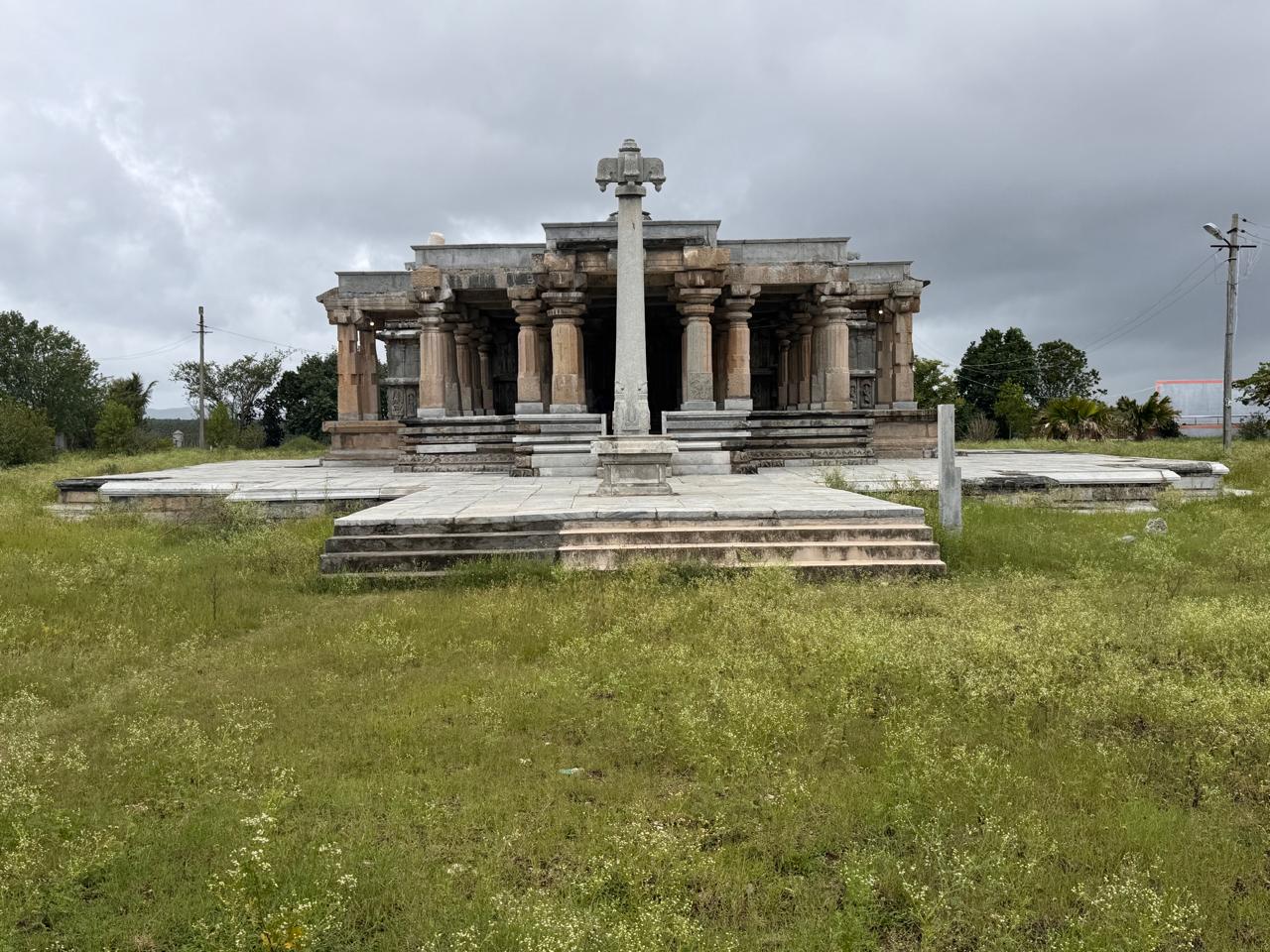
The temple sits on a stellate, star-shaped platform — a signature device of mature Hoysala design. Rather than a plain square sanctum, the plinth folds outward into many points, multiplying the wall surface available for carving and letting each face catch light and shadow differently through the day.
It follows the compact Ekakuta layout: a single shrine housing one deity, fronted by a small pillared mantapa (hall). Inside, stone benches line the walls, and the lintels above are carved rather than left plain.

The star-shaped base creates repeating projections and recesses around the sanctum — a hallmark of later Hoysala temples, built for texture rather than sheer size.
Roughly twenty pillars support the mantapa roof, each individually turned on a lathe — a technique the Hoysala workshops were known for perfecting.
Like most Hoysala monuments, the temple is worked in chloritic schist — soft enough to carve finely when freshly quarried, hardening on exposure to air.
Baggavalli was never built to rival the great Kesava temple at Somanathapura — its charm lies in intimacy, not scale, and in going largely unnoticed by mass tourism.
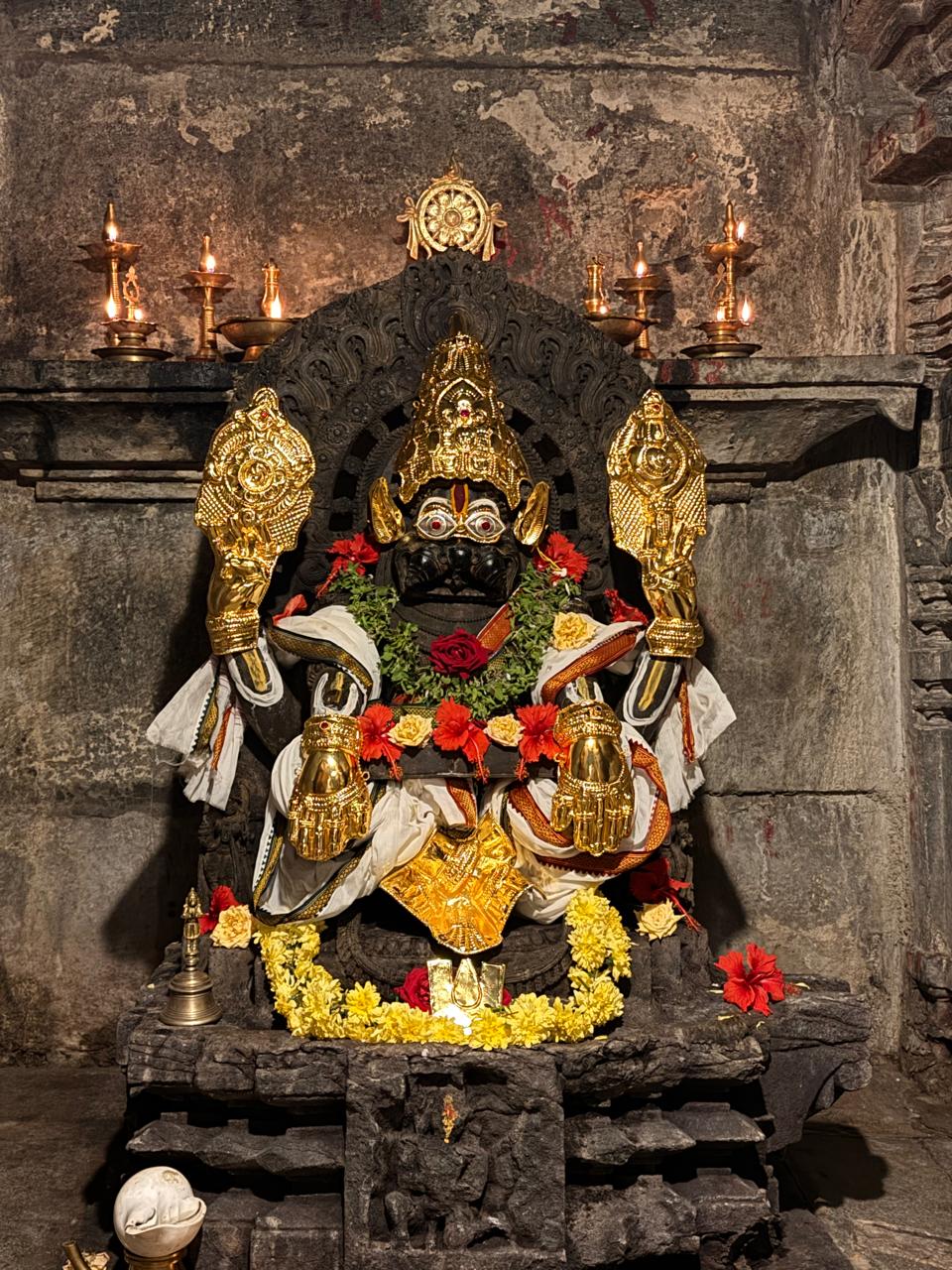
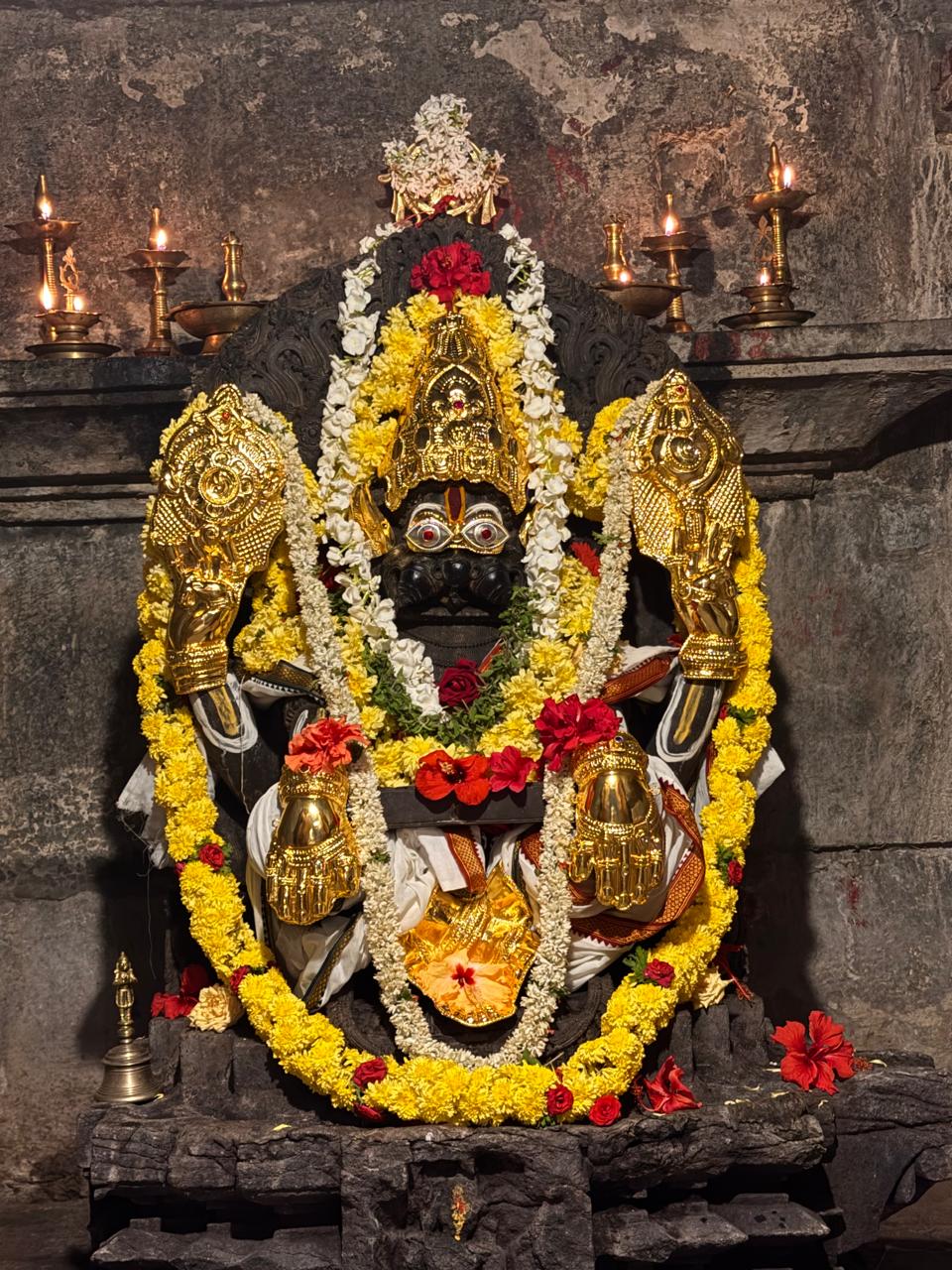
In most temples, Narasimha — Vishnu's fourth avatar, half man and half lion — appears fierce: claws bared, mid-motion, destroying the demon Hiranyakashipu. Baggavalli shows something else entirely.
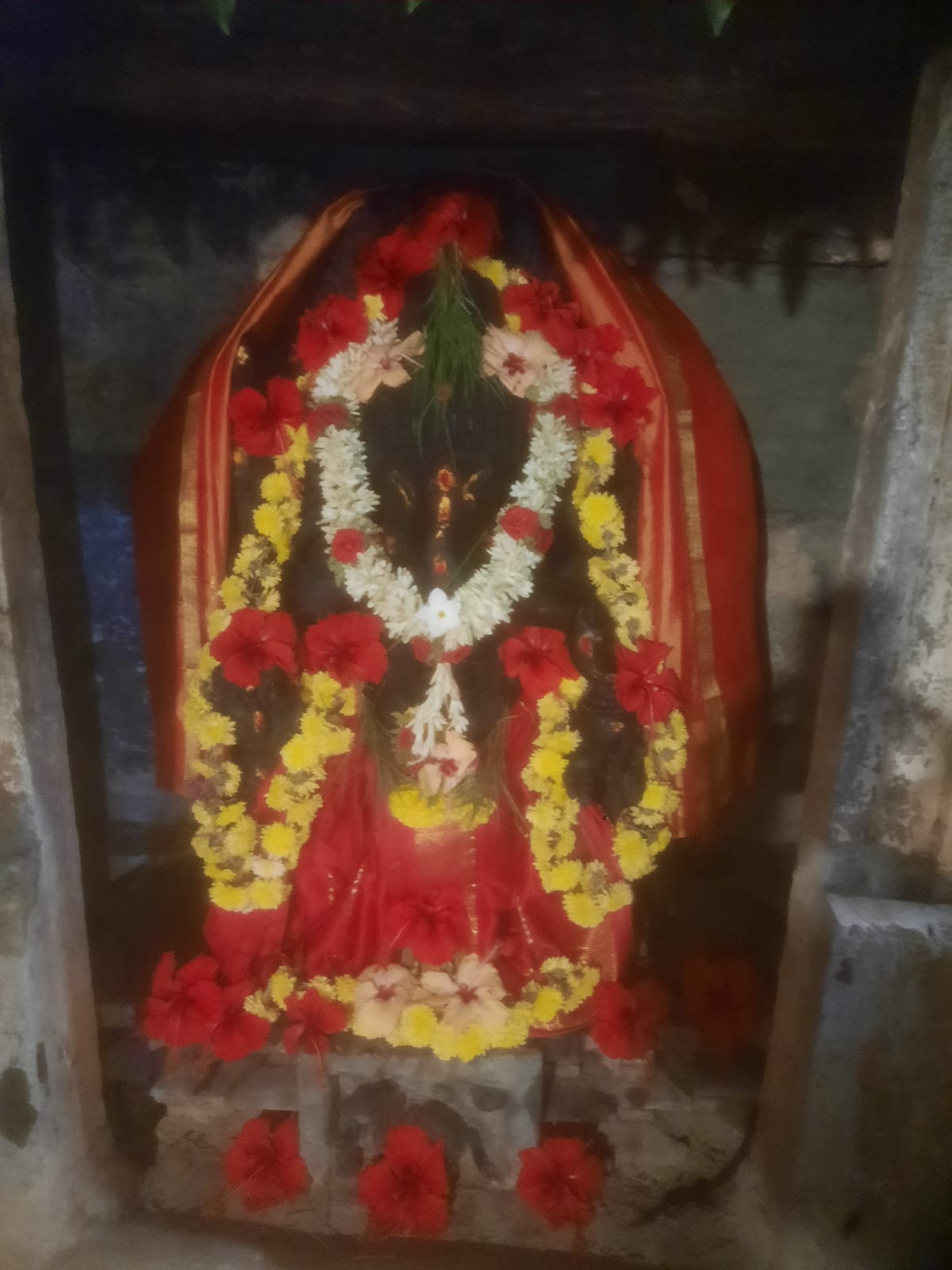
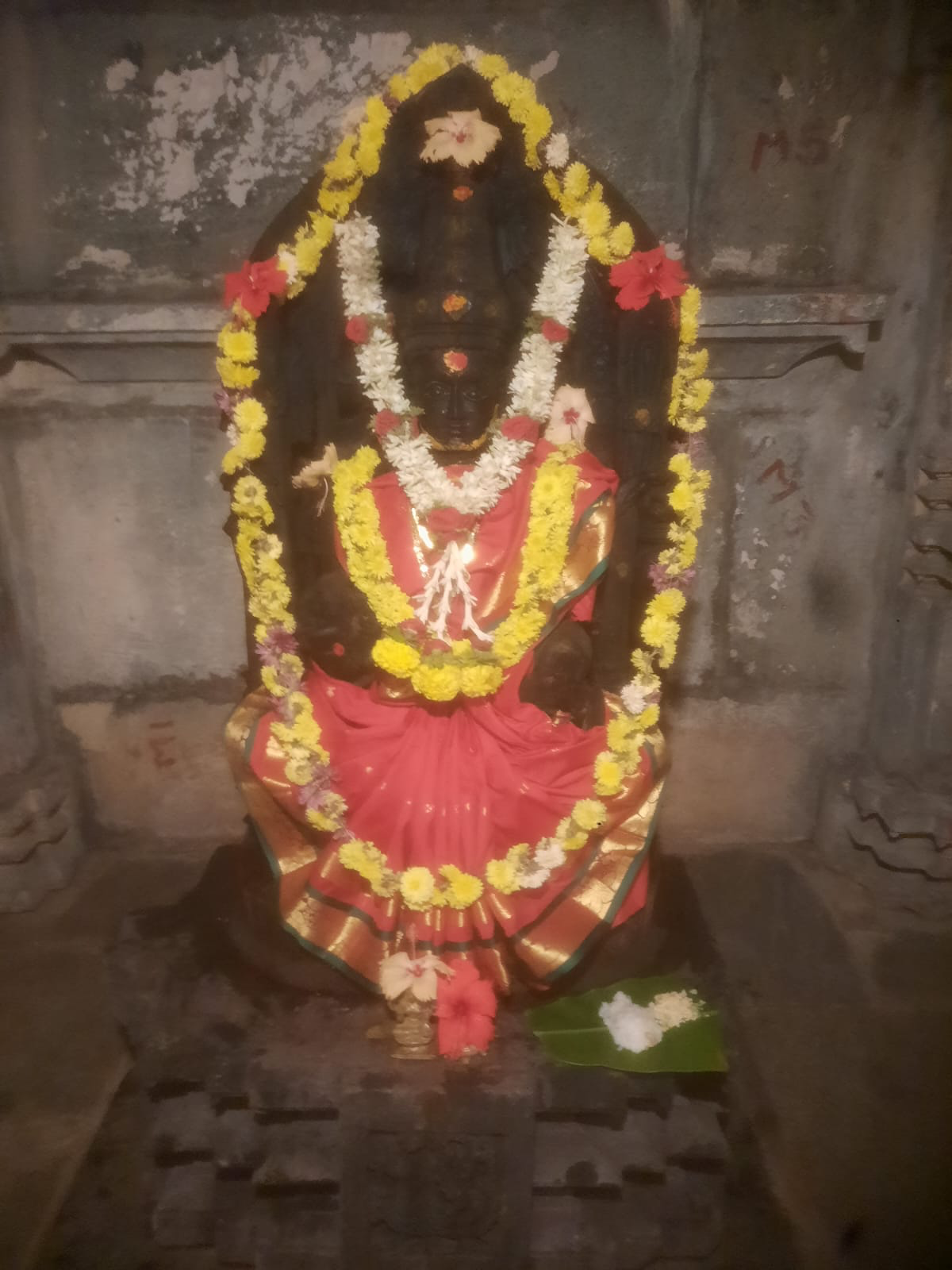
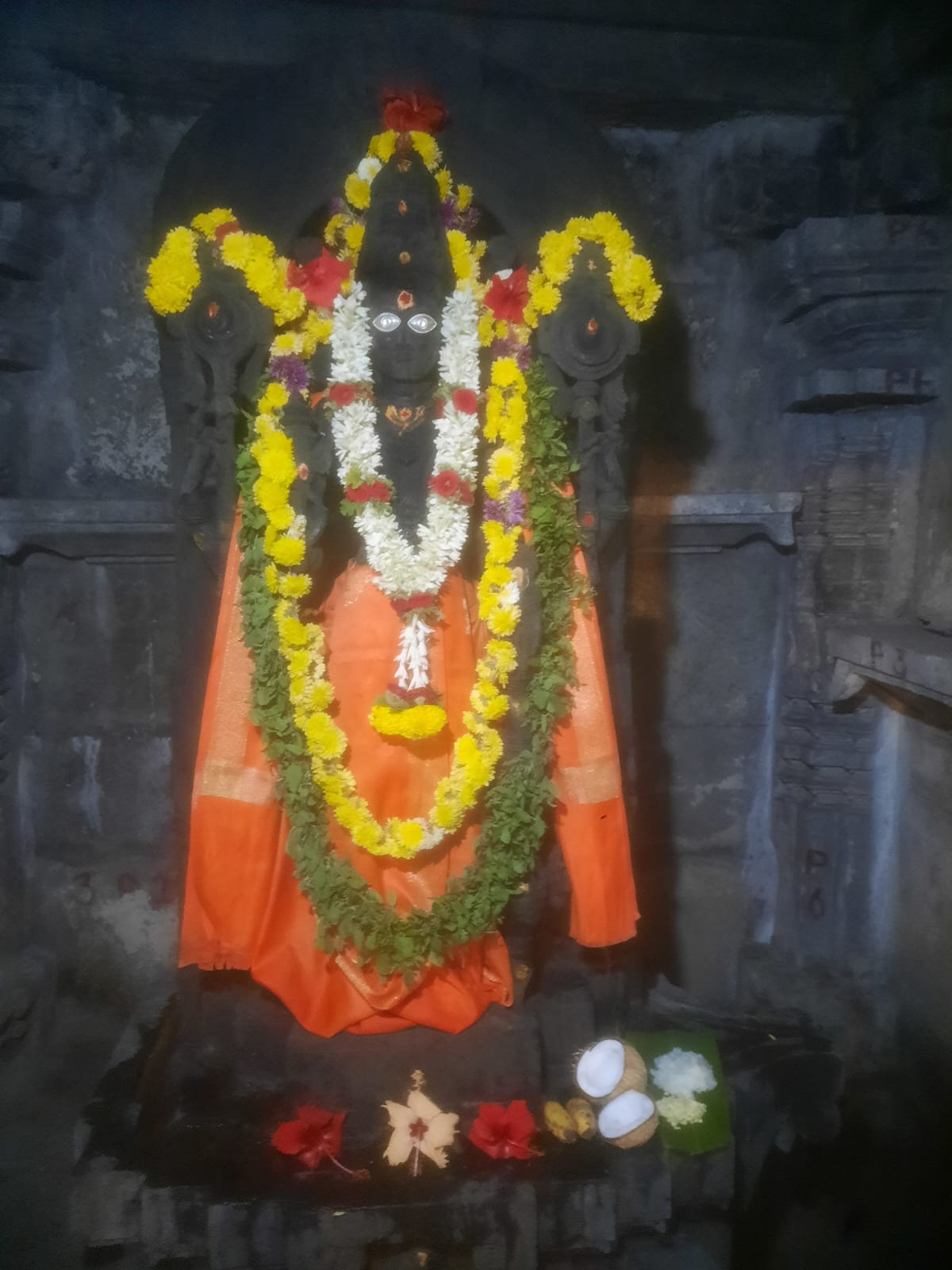
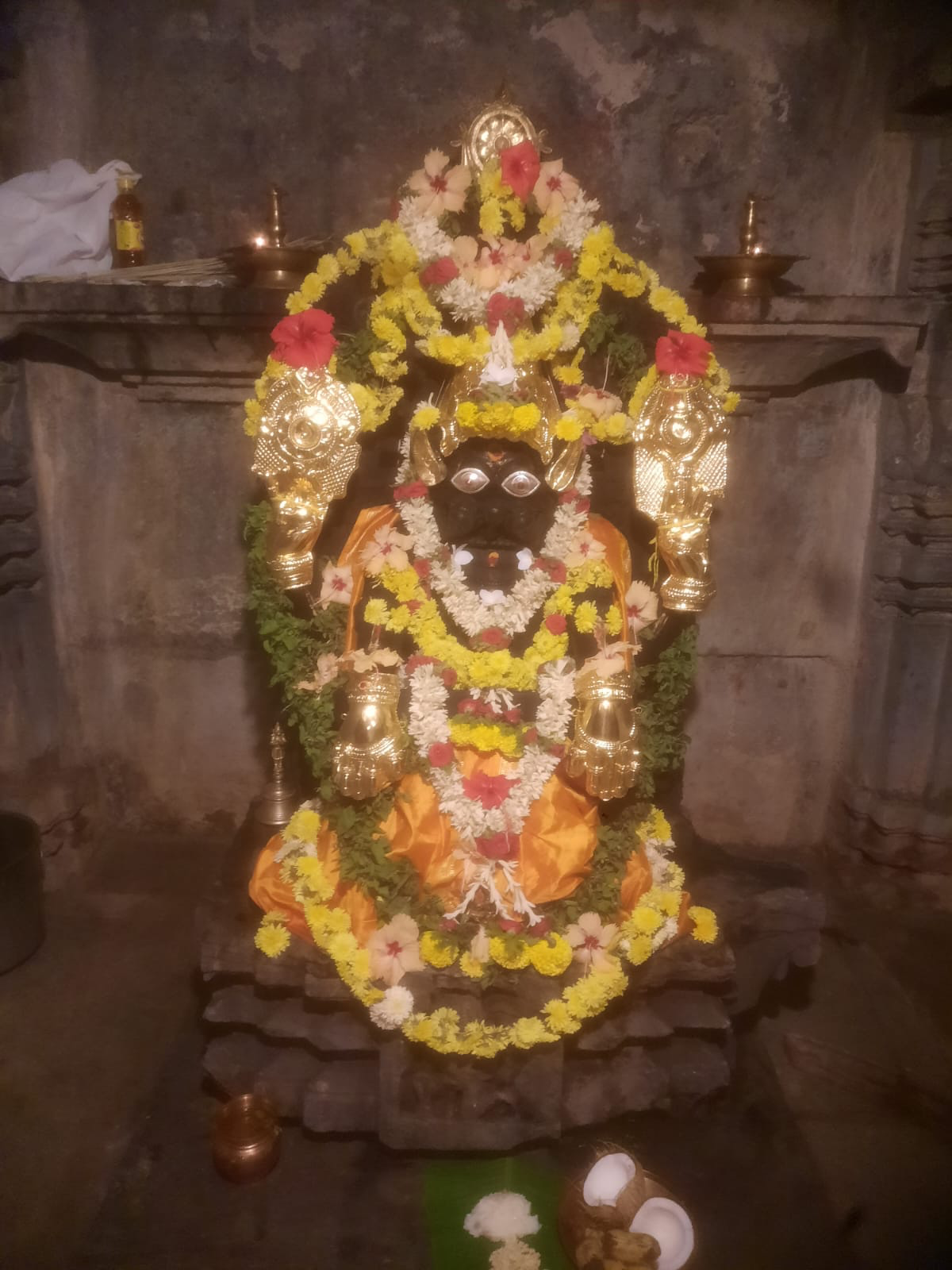
Here the deity is seated in padmasana, the lotus posture, hands resting in meditation. This calm, contemplative iconography — Yoga Narasimha — is uncommon in Hindu temple art, and it is what gives this shrine its name.
As part of daily ritual, the murti is anointed in turmeric (haldi) — an offering believed auspicious and protective — before being adorned with garlands ahead of darshan.
.jpeg)
.jpeg)
.jpeg)
.jpeg)
.jpeg)
.jpeg)
.jpeg)
.jpeg)
.jpeg)
.jpeg)
Sri Yoga Narasimha Swamy Temple is located in Baggavalli village, near Ajjampura in Karnataka.
Use the interactive map to inspect the surrounding roads, open the location in Google Maps, or begin navigation from your current location.
Village temple schedules may change with the season and priest availability. Confirm locally before making a long journey.
The shrine is a working temple as well as a protected monument. Photography and footwear norms are set on site.
Request a seva or to contribute in the name of your family. Share your details below and the temple will reach out to confirm the date and sankalpa.